Les Fees du Vivant
Shared via AddThis
Tuesday, 25 August 2009


Thursday, 20 August 2009
Wednesday, 19 August 2009
Tuesday, 18 August 2009
Créer des monnaies par millions - Le Monde.fr
Créer des monnaies par millions - Le Monde.fr
Shared via AddThis
Partout dans le monde, des communautés créent de nouvelles monnaies : les SEL (système d'échange local) permettent aux individus d'échanger leurs compétences, comptées en unités de temps. Les SOL (abréviation de solidaire), expérimentés en France par une dizaine de communes, fonctionnent sur carte à puce comme une carte de fidélité dans un magasin - sauf que c'est tout un réseau de magasins et d'institutions qui participent au système.
Friday, 14 August 2009


Thursday, 13 August 2009
GLOBAL VILLAGES NETWORK

"One of the most powerful potentials that we are just beginning to unleash, is the feeling that in a time of increased global competition, diminuishing resources and growing uncertainty we have to use our local resources more wisely and that we can increasingly do so with the access to global knowledge, the sharing of experiences, the division of mental labour and the local connectedness that new information technologies make possible. The discovery of the full potential of this combination between local resources and global knowledge is the purpose of the GLOBAL VILLAGE NETWORK."
Open year Open pay

The global economic system will encourage individuals, businesses and institutions to share their prosperity and participate actively in bringing prosperity to others, making Income Inequality an irrelevant issue. Unemployment and welfare will be unheard of.” - Muhammad Yunus
Integral Life
Integral Life is your gateway to cutting edge conversations that help you cultivate greater freedom, wholeness, balance and ease in your life. Featuring hundreds of hours of audio and video discussions with today’s greatest thinkers, leaders, artists, and visionaries, Integral Life offers a much more comprehensive, cohesive, and fulfilling way to navigate the rich complexity of the traditional, modern, and post-modern worlds. Through it all runs a single thread: a fierce determination to connect the dots of our fragmented lives and make sense of a world gone slightly mad.
Here you can discover how people from all walks of life are applying the Integral approach to their lives and their work, and see for yourself how it is being used to define the leading-edge of a wide variety of disciplines.
Feel free to take a listen to the free audio samples provided below, and simply click on the images to be taken to the full presentation. You can also click on any of the topic banners below if you'd like to see more offerings in each category.
Happiness
How would you do things differently if you were in charge?
More than an emotion, more than good life and pleasure, the new definition of happiness should be closer to a set of positive attitudes. The workplace is a good example: a positive attitude will spread to the people you work with and the overall working atmosphere; a grumpy attitude will have the reverse effect. Waking up early in the morning to go to work is then a less painful daily event and then… the effect snowballs.
Action Learning : Michael Marquardt at UMBC ISD Training Forum April 2009

Learn how Action Learning is not only an effective problem solving process but also has been valuable to a growing number of organizations worldwide as a powerful tool for developing leaders, teams...
Date a Brain
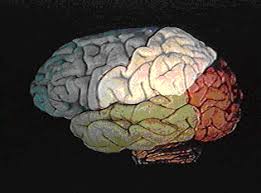
See a movie on the brain qualities and performances you can expect from your mind if you understand it bette
Monday, 4 August 2008
Alternative trade networks and the coffee system

coffee is a complex business. But the book is filled with examples of growers groups that have been able to achieve remarkable progress by pooling expertise and resources that deliver a lot of the value currently added (if at all) by layers of intermediaries.
Of particular importance are alternative trade networks and the nascent Community Agroecology Network (CAN). Alternative trade networks emerging in the coffee system are based on lessons learned from farmers’ markets, community-supported agriculture, and attempts in other markets to connect producers and consumers in more direct relationships that are socially just and ecologically restorative, and promote mutual learning and positive change.
Alternative trade networks redistribute value through the network against the logic of bulk commodity production, reconvene trust between food producers and consumers during the direct exchange of goods.
In Agua Buena, Costa Rica, the farmers’ cooperative has developed the capacity to ship roasted coffee directly to North American consumers’ doors. Coffee delivery depends on the postal service, and direct exchange is difficulty; however email and Internet chatrooms facilitate these interactions.
I'm hoping to involve the Community Agroecology Network (CAN) in City Eco Lab, this November, to see what knowledge and expertise might be shared between them and organisations like AMAP in France. Watch this space.
Sunday, 6 April 2008
New tools again poverty : specific and complementary money
"Make poverty history and give the poor people the right and the mean to develop there creative. This will be the only way to develop adapted solution to there current situation. The complementary and specific money is part of this strategy. Change and open your mind." Jean-Luc Roux
Complementary Currency Systems are appropriately-designed social and economic networks which encourage cooperation and reciprocation, self-reliance and mutual aid, local production, micro-small enterprise development, socio-economic solidarity and economic justice for the meeting of needs, cultural revitalization, socio-economic solidarity and rural reconstruction.
Complementary Currency Systems use a medium of exchange that circulates together with the national currency to support the local economy in a way that is socially just. Click here for a brief introduction to Community Currency Systems in Asia, Africa and Latin America.
To learn more about starting or improving your local exchange, complementary currency or appropriate economic system, please make use of the many resources available in this website.
Le Monde selon Monsanto

Documentaire de Marie-Monique Robin
(France, 2007, 1h48mn)
Coproduction : ARTE France, Image et Compagnie, Productions Thalie, Office National du film du Canada, WDR
Un fantastitque travail de vérité journalistique. Prenez le temps citoyen pour être informé et agir en conséquence. (Jean-Luc Roux)
"Je n’ai jamais vu une société qui ait une influence aussi déterminante et à un niveau aussi élevé sur les autorités gouvernementales en charge de la réglementation que Monsanto avec ses OGM."
(l’essayiste Jeremy Rifkin)
Monsanto, multinationale américaine née en 1901 à Saint-Louis, dans le Missouri, et d’abord spécialisée dans l’industrie chimique, est devenue en un peu plus d’un siècle le leader mondial des biotechnologies, en particulier sur le marché des organismes génétiquement modifiés (OGM). Elle détient les brevets de 90 % du maïs, du soja, du colza, ou du coton transgéniques cultivés dans le monde. Par le biais de rachats successifs, elle est en train de devenir le premier semencier de la planète et à terme, c’est la chaîne alimentaire toute entière qu’elle pourrait contrôler. Mais c’est d’abord avec le Round Up, son herbicide "total" (longtemps estampillé "biodégradable") qu’elle a commencé, à partir de 1974, à conquérir le monde. On lui doit aussi des produits aussi variés que le terrible Agent Orange, massivement déversé sur le Viêt-nam par l’armée américaine, les PCB (pyralène en France, interdit au début des années 80), l’aspartame ou les hormones de croissance (interdites en Europe et au Canada). Monsanto, avertit Marie-Monique Robin, est l’une des entreprises "les plus controversées de l’ère industrielle".
"Nourriture, santé, espoir" : sur son site, la firme de Saint-Louis promet une agriculture durable, aux rendements supérieurs, respectueuse de l’environnement. Journaliste d’investigation chevronnée, couronnée du Prix Albert-Londres en 1995, la réalisatrice a décidé de juger sur pièce, y compris en explorant le passé de l’entreprise. Sa première étape la mène à Anniston, en Alabama, où 40 % de la population, majoritairement noire, souffre de cancer. En 2002, Monsanto a été condamnée par la justice à lui verser 700 millions de dollars pour avoir dissimulé pendant des décennies la dangerosité des PCB…
Cobayes
Implacablement, d’Anniston jusqu’au Paraguay en passant par l’Inde, la Grande-Bretagne ou le Mexique, Marie-Monique Robin collecte des faits aussi alarmants qu’irréfutables et démonte point par point le discours de Monsanto. Elle démontre que, dans le dossier des OGM, les réglementations américaine et européenne ont été directement influencées, sans validation scientifique valable, par des alliés de la firme placés à des postes-clé au sein d’une administration tout sauf indépendante. Elle expose les stupéfiantes méthodes utilisées par la multinationale pour discréditer ses adversaires, mais aussi intimider les agriculteurs à domicile.
Elle laisse entrevoir enfin la catastrophe en germe dans les visées hégémoniques de Monsanto sur les semences du monde, dont les paysans indiens ou paraguayens subissent aujourd’hui les conséquences. "On ne devrait pas utiliser les citoyens comme des cobayes." Pour avoir exprimé ses inquiétudes à propos des OGM sur un plateau de la BBC, le biologiste Arpad Pusztaï fut licencié du jour au lendemain.
Quelques années plus tard, Le monde selon Monsanto donne une ampleur planétaire à cet avertissement.
Wednesday, 12 December 2007
Indonesia: deforestation impacts people of the forests

Flattened forests
Remote tribal communities in Papua have for the first time used digital video to tell the outside world about the impact uncontrolled logging is having on their traditional way of life. Training was provided by London-based Environmental Investigation Agency and Jakarta-based, Telapak. Providing financial incentives to developing countries to reduce deforestation will be high on the agenda at the Bali UN climate change conference
Video link :http://www.guardian.co.uk/environment/video/2007/nov/30/logging
Saturday, 27 October 2007
Environmental failures 'put humanity at risk'

Global Environmental Outlook 4 UNEP
The future of humanity has been put at risk by a failure to address environmental problems including climate change, species extinction and a growing human population, according to a new UN report.
In a sweeping audit of the world's environmental wellbeing, the study by the UN Environment Programme (UNEP) warns that governments are still failing to recognise the seriousness of major environmental issues.
The study, involving more than 1,400 scientists, found that human consumption had far outstripped available resources. Each person on Earth now requires a third more land to supply his or her needs than the planet can supply, it finds.
www.unep.org
Subscribe to:
Posts (Atom)